We are not currently meeting 'in-person'

We are not currently meeting 'in-person.'
I have made the difficult decision to stop holding our in-person Sunday night meetings - you can read more about this in my post here. I will be continuing to post weekly content here and in our newsletter. Do remember to sign up for the 'Metta Letter' newsletter below as I will be sending out weekly meditations there.

Saturday, February 12, 2022

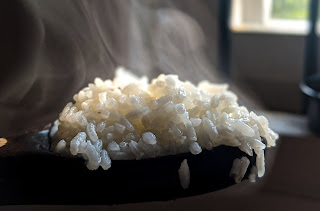
Rice Pots

Rice Pots

A question that often comes up is 'why metta?' - there are many aspects to meditation and following a spiritual path, so why the focus on metta?

There are, for me, several answers to this, but simply put I believe that the cultivation of metta - lovingkindness or goodwill - is exactly what the world needs today. As the world appears to get crazier and less and less understandable then the more important I believe it is for us as individuals to develop our own capacity for love, compassion, joy and equanimity (the four brahma-viharas that have metta as their core). As Leo Tolstoy said: “Everyone thinks of changing the world, but no one thinks of changing himself.”

When we work on cultivating lovingkindness we work on the one person who we can change - our self. Earlier this week I read the short Okkha Sutta - the Sutta of the Serving Dishes (or 'Rice Pots'). In it, the Buddha tells his monks:

Monks, if someone were to give a gift of one hundred serving dishes of food in the morning, one hundred at mid-day, and one hundred in the evening; and another person were to develop a mind of good-will (metta) — even for the time it takes to pull on a cow's udder — in the morning, again at mid-day, and again in the evening, this second action would be more fruitful than the first.

Thus you should train yourselves: 'Our awareness-release (liberation) through good-will (metta) will be cultivated, developed, pursued, handed the reins and taken as a basis, given a grounding, steadied, consolidated, & well-undertaken. That's how you should train yourselves.
This is a really strong statement. Remember that the monks listening to this would have relied on the generosity of local lay-people for their food - no gifts, no meals. We don't know the situation when this was said, but maybe they had received such a generous gift and were rejoicing, or maybe things were tough and they were hungry - either way they would have greatly appreciated three-hundred dishes of food in a day! So the bar here is really high. And yet the Buddha says that three simple moments of mindfulness of good-will, three brief moments of metta, were even more fruitful.

This may seem like hyperbole, but it really isn't. If you think about it, the person who reflects on and cultivates goodwill will naturally be more generous, more compassionate and more liberated (translated here as 'awareness-release,' being free from delusion). People talk (shout) a lot about freedom and liberation at the moment but the dialog is mostly about selfish freedom or license. Liberation of the mind stems from cultivating metta - goodwill and lovingkindness towards all beings.

This idea of the importance of cultivating metta is echoed elsewhere - I wrote a bit about it last year in the post on 'One Sixteenth.' There I quoted from the Itivuttaka where we are told:

Bhikkhus, whatever grounds there are for making merit productive of a future birth, all these do not equal a sixteenth part of the mind-release of loving-kindness. The mind-release of loving-kindness surpasses them and shines forth, bright and brilliant.
So this week I would like to encourage you to practice those brief moments of metta. You don't have to be milking a cow to do it, it can be done at any point. Pausing and cultivating goodwill and lovingkindness can be a powerful act that we can all do.

Metta, Chris.

PS. If you would like to practice a longer, more traditional approach to cultivating metta then I have linked below a fully guided thirty minute meditation. You are welcome to use it in any way that you feel helps in your practice.


"Okkha Sutta: Serving Dishes" (SN 20.4), translated from the Pali by Thanissaro Bhikkhu. Access to Insight (BCBS Edition),
27 June 2010, http://www.accesstoinsight.org/tipitaka/sn/sn20/sn20.004.than.html

"Itivuttaka: The Group of Ones" (Iti 24-27), translated from the Pali by John D. Ireland. Access to Insight (BCBS Edition),
24 November 2013, http://www.accesstoinsight.org/tipitaka/kn/iti/iti.1.024-027.irel.html


Photo by Faris Mohammed on Unsplash


Saturday, February 5, 2022

Curling

 Curling

This week the 2022 Winter Olympics started in Beijing. Now, I must admit that I'm not that into watching the Winter Olympics generally, but I do enjoy watching the odd event just to admire the amazing skills of the athletes.

The one event that does capture my interest however is the Curling. There is just something about the sport that is on the one hand totally ridiculous and on the other completely mesmerizing. I remember watching it with friends many years ago purely to make fun of it - but then becoming completely hooked.

There is something about the slow, measured pace, the concentration of the athletes, and their level of skill and focus that makes it an almost contemplative sport to watch. Who knew that pushing a rock (or a cat) over ice could be so absorbing?

A couple of years ago I wrote a piece on the mental focus of athletes which I repeat below. Hopefully there are things we can all learn here to help us in our practice.


That Moment


I love watching extraordinary humans. Whether they are athletes, artists, musicians, dancers... what fascinates me is how they manage to perform at their peak, consistently, on-demand.

When we think of these people we often focus on their amazing physical abilities - their strength, coordination, stamina or dexterity. And yet the more we watch them the more we see that it is not just about their bodies, but about their mental strength, focus and resilience.

Think for a moment of a gymnast, standing by the side of the mat, about to start a routine. They pause, close their eyes or maybe gaze gently forward, and prepare their mind for the actions that are to come. This is all clearly visible, and it is often in this very moment that the success or otherwise of the routine stems.

Of course it's not just gymnasts. The same can be seen with concert pianists before they start to play, basketball players before they take a free throw, soccer players before a penalty, singers before a solo... The key is that the action is preceded by the calming and the integration of the mind and the body.

In modern sports this phenomenon is called 'the quiet eye.' It has become so important that in 2017, the European Journal of Sport Science devoted a whole issue to it. For a less academic take you can read a great overview of 'the quiet eye' in the BBC article linked here.

This clarity - this connection between the mind, body and action - is clearest in our elite athletes and artists but is something we can all practice. More than that, one of the ways I have found to help cultivate the connection between mind and body in meditation is to start by visualizing an athlete or artist, and to meditate on what they are doing. I can then, in my own imperfect way, transfer that to a feeling and awareness of integration between my own mind and body.

In the Satipatthana Sutta The Buddha says this of a meditator:
'Experiencing the whole body, I shall breathe in,' thinking thus, he trains himself.
'Experiencing the whole body, I shall breathe out,' thinking thus, he trains himself.
'Calming the activity of the body, I shall breathe in,' thinking thus, he trains himself.
'Calming the activity of the body, I shall breathe out,' thinking thus, he trains himself.
While you and I are probably not elite athletes, we can gain inspiration from them and learn from them. Great sporting or artistic feats are not done purely by the body, but by the integration of the mind and the body. This is also what we do in meditation.

I have linked below a fully guided audio meditation on 'That Moment.' Feel free to use it in your practice in whatever way helps

 Metta, Chris.

"Satipatthana Sutta: The Discourse on the Arousing of Mindfulness" (MN 10), translated from the Pali by Soma Thera. Access to Insight (BCBS Edition), 13 June 2010, http://www.accesstoinsight.org/tipitaka/mn/mn.010.soma.html
Photo, World Curling Federation/Céline Stucki


Saturday, January 29, 2022

Finding Neutral

Finding Neutral

The practice of Metta Bhavana - 'Cultivation of Metta (Goodwill or Lovingkindness)' is an incredibly powerful and important one. As I have said often, we can all agree that this world would be so much better if everyone else spoke and acted from a place of love - but you can't change anyone else. You can only change yourself. That is why cultivation of metta is so important.

The traditional form of Metta Bhavana goes back hundreds of years and follows the following rough outline: You practice cultivating metta for yourself, then for a (specific) friend, then for a (specific) neutral person, then for a (specific) enemy. Finally you practice expanding geographically to eventually hold feelings of lovingkindness and goodwill for all beings (the 'sending to the ten directions'). I emphasize 'specific' here because part of the power of the practice is that it avoids generalities. It is trivially easy to say 'I love all beings,' but much harder to find love for a specific person.

When you first start the practice it is common to see the progression from self to enemy as one of increasing difficulty, but this is a misconception that soon goes away after some practice. This misunderstanding is even repeated in the Wikipedia Article on Maitrī (Sanskrit for Metta):

The practice gradually increases in difficulty with respect to the targets that receive the practitioner’s compassion or loving-kindness. At first the practitioner is targeting "oneself, then loved ones, neutral ones, difficult ones and finally all beings,...
While this is certainly how things feel at first, as we get deeper we realize that there are complications for all four people - especially for the self. It is often harder to generate love and empathy for our self than it is for the others - after all, we know all of our own faults and shortcomings.

We soon start to recognize that generating metta unconditionally is hard for the known and the unknown, the liked and the disliked (in other words the four persons used in the practice). And for me, the key person is the Neutral Person.

This may be a surprise to some of you, as very often the Neutral Person is skipped over or downplayed. There is surprisingly little written about the importance of the Neutral person in the practice. Even the name, neutral, has a connotation of being boring or unimportant.

We typically talk about them in terms of 'someone you would recognize but know little or nothing about.' They could be someone you pass on your way to work, or a cashier, or someone who sits in the corner at work (or Sangha) that you've never talked to.

The important thing is that you know nothing about them. They might volunteer at the Humane Society, or they might kick their dog when they get home. They might be open and generous or they might be bigoted and narrow-minded. The point is you don't know, and what you are practicing is to feel goodwill and love for them equally regardless of the truth of how they live their life. And that is hard. The Neutral Person can become the key, the pivot to your understanding of what it means for lovingkindness to be unconditional.

In the beautiful and well-known Karaniya Metta Sutta it says:

As a mother would risk her life
to protect her child, her only child,
even so should one cultivate a limitless heart
with regard to all beings.

The interesting thing here is that a Mother's love for her child is not unconditional - at least in the sense that it is dependent on the child being her own child. And yet we are told this is the kind of limitless heart we should be cultivating towards all beings.

Contemplating the Neutral Person is a powerful way to move beyond conditional love towards this unbounded heart. I have linked below a fully guided meditation where we focus on the Neutral Person - you are free to use it in whatever way helps you in your practice. If you have never practiced Metta Bhavana before, or if you need a refresher, this might be a good place to start.

Metta, Chris.


Karaniya Metta Sutta: Good Will" (Sn 1.8), translated from the Pali by Thanissaro Bhikkhu. Access to Insight (BCBS Edition),
30 November 2013, http://www.accesstoinsight.org/tipitaka/kn/snp/snp.1.08.than.html .


Photo by Alok Sharma on Unsplash


Saturday, January 22, 2022

The Sea Turtle

The Sea Turtle

You have probably heard by now that the great teacher Thích Nhất Hạnh passed away yesterday (or today, depending on your time-zone). Thầy had been ill for many years after suffering a brain hemorrhage, and passed away peacefully at his root temple, Từ Hiếu Temple, in Huế Vietnam.

Like many of you I am sure, Thầy was a huge influence on my thinking and path, especially through his books, and while I never met the great man I will miss him.

But while I have a tinge of sadness here the overwhelming feeling I have is that of gratitude. Through Thầy's whole life he left a huge imprint on our society - from his teachings to his acts of compassion and work for peace, his influence will continue. As Terry Pratchett said, “Do you not know that a man is not dead while his name is still spoken?*”

Earlier this week I was reminded of the metaphor of the Sea Turtle that The Buddha uses in the Chiggala Sutta:

"Monks, suppose that this great earth were totally covered with water, and a man were to toss a yoke with a single hole there. A wind from the east would push it west, a wind from the west would push it east. A wind from the north would push it south, a wind from the south would push it north. And suppose a blind sea-turtle were there. It would come to the surface once every one hundred years. Now what do you think: would that blind sea-turtle, coming to the surface once every one hundred years, stick his neck into the yoke with a single hole?"

"It would be a sheer coincidence, lord, that the blind sea-turtle, coming to the surface once every one hundred years, would stick his neck into the yoke with a single hole."

"It's likewise a sheer coincidence that one obtains the human state. It's likewise a sheer coincidence that a Tathagata, worthy & rightly self-awakened, arises in the world. It's likewise a sheer coincidence that a doctrine & discipline expounded by a Tathagata appears in the world. Now, this human state has been obtained. A Tathagata, worthy & rightly self-awakened, has arisen in the world. A doctrine & discipline expounded by a Tathagata appears in the world.

"Therefore your duty is the contemplation, 'This is stress... This is the origination of stress... This is the cessation of stress.' Your duty is the contemplation, 'This is the path of practice leading to the cessation of stress.'"

What this is teaching us is that even being born a human with the ability to learn and reason is an unusual and precious thing, and being born in a time when we are able to hear the teachings is even more precious - so we are told not to waste it.

We are all incredibly fortunate to be living in a time where our access to the teachings of great men and women is unprecedented

On the passing of Thầy we should all reflect on our fortune in being alive at the same time he was, and our unfettered access to his teachings and those of many other wonderful teachers. This is not something to take for granted.

Metta, Chris.

PS: A couple of years ago I posted a small tribute to Thầy for his 94th Birthday - you can find it here on our site. I also posted at the time a fully guided audio meditation using his short poem for contemplation, focusing on the line 'Breathing In, I Smile.' I can't think of a more appropriate meditation to do right now, so I have linked it below.


(*) GNU STP

"Chiggala Sutta: The Hole" (SN 56.48), translated from the Pali by Thanissaro Bhikkhu. Access to Insight (BCBS Edition), 1 July 2010, http://www.accesstoinsight.org/tipitaka/sn/sn56/sn56.048.than.html .

Photo by Kris-Mikael Krister on Unsplash


Saturday, January 15, 2022

In the Middle of All This


In the Middle of All This

This week I made the difficult decision to once again temporarily suspend our in-person weekly meditation gatherings. For those of you who aren't in the area or who attend other Sanghas we are a small, informal friendly group who just share in sitting together each week. The audio I link in these newsletters is usually taken from one of these gatherings. Like many parts of the country (and world) we are experiencing a spike in COVID cases, and I decided that the right thing for us to do was not to add to the pressure and take a short break from our in-person meetings.

Appropriately enough in our meeting last week we meditated on the Pali word tatramajjhattata - a word usually translated as 'equanimity'  that is literally made up of the words for "Standing in the middle of all this." I didn't know at the time that we would be suspending the group - or that the new microphone I bought wouldn't work - but it is definitely the right message for all of us in these times. Equanimity is being able to stand strong 'in the middle of all this.'

Last year when we first re-started meetings I posted the following article. At the time it was in response to what felt like a positive change (re-starting our meetings), but the point about equanimity is that it is going beyond preference, so this is equally as relevant when things are more difficult.

Wherever in the world you are, and however things are for you right now I hope that these thoughts are beneficial to you.

Metta, Chris


Chapters

Last week marked a bit of a milestone, as for the first time in over 15 months a small group of us met together, physically, in the same room to share in meditation together.  It was a little strange at first, with some awkwardness and some laughs, but it felt wonderful to be back.

The occasion got me thinking about how we often think of our lives as progressing in 'chapters,' where we turn a page and move on to the next phase of our life. Meeting together again felt a bit like that. We weren't going back to where we were before, but starting anew.

Of course the world and the nature of time isn't quite as simple as that, but it certainly represents how we often feel. As we stand at the point of a new chapter we can easily become tied up in the memories of the past and our hopes, fears and wishes for the future. When we do that we can become disconnected from the reality of the moment. We can be so caught up with the shift that we end up being anywhere but the present.

There are two different Pali words that are usually translated as 'equanimity.' The one we are most familiar with is Upekkha, one of the four Brahma-Viharas. In his wonderful article on Equanimity Gil Fronsdal describes the other Pali word used in this way:

The second word often translated as equanimity is tatramajjhattata, a compound made of simple Pali words. Tatra, meaning “there,” sometimes refers to “all these things.” Majjha means “middle,” and tata means “to stand or to pose.” Put together, the word becomes “to stand in the middle of all this.” As a form of equanimity, “being in the middle” refers to balance, to remaining centered in the middle of whatever is happening. This balance comes from inner strength or stability. The strong presence of inner calm, well-being, confidence, vitality, or integrity can keep us upright, like a ballast keeps a ship upright in strong winds. As inner strength develops, equanimity follows.

I love this way of looking at things, and I think it tells us how we should be as chapters change in our life. Without clinging or aversion for what has happened in the past, and without clinging or aversion for what may be in the future. Instead we 'stand in the middle of all this.'

Reading this reminded me of the lovely mantra meditation that Ram Dass taught. The mantra is a simple one - "And This Also." This is a mantra that speaks to equanimity, especially equanimity where we 'stand in the middle of all this.'

I have linked below the recording of our gathering last week. It includes a fully-guided 30 minute meditation using the mantra "And This Also." You can also hear me struggle to pronounce Tatramajjhattata! If you think it may be of use to you in your practice please feel free to use it whenever you wish, and to share it with any others who might find it helpful.

Wishing you all a wonderful week - stay cool and in the middle of all this!

Metta, Chris.